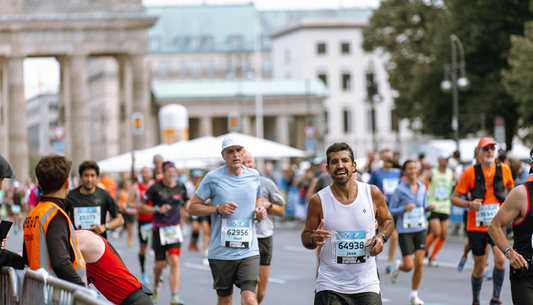

Why Should You Care About Your Singlet Weight on Race Day?
A running singlet is more than just a tank top today. It's a key part of your gear for every run, from daily miles to finish-line photos. When you're aiming for a personal record, every little detail matters, including the weight of your singlet.
At NEDAO, we believe the best singlet is one you forget about once you start racing. It should feel light, stay in place, and let you focus on your pace. That's what an ultralight racing singlet aims for.

NEDAO started with a simple problem: a stubborn blister. They created a five-toe sock to solve it. Now, they apply the same focus to their professional racing singlets. They aim to fix the small issues that can ruin your race day.
This article explores why singlet weight is important, even when it's wet. It can affect how you feel during a long race. We'll discuss the mental benefits, comfort, heat control, and details that make a singlet race-ready. By the end, you'll know what to look for in a top-notch racing singlet. NEDAO's Inner Lane philosophy and QiFlow lineup are designed to keep you moving forward.
Race day is sacred: why “not noticing it” is the performance goal
Race mornings follow a strict routine. Runners plan their breakfast, warm-up, and the walk to the corrals. They also decide on their outfit, including a racing singlet. This singlet is more than clothes; it signals that today is special.

Professional coaches often say the singlet is where you pin your number. This gives it a unique role. Its design is simple and instantly signals race mode.
Why a great racing singlet running top disappears once the gun goes off
The best gear should be unnoticed during a race. You should focus on your breathing and pace, not your clothes. This is the true test of a singlet's comfort.
NEDAO aims to remove distractions. They focus on clean seams, a stable fit, and a quiet feel. This helps you stay focused, even when the pace is fast.
Weight adds up over miles: how a lightweight running singlet affects feel and efficiency
On a long run, every gram matters. A lightweight singlet feels great at first but can feel heavy later. This change affects your stride and breathing.

Long-distance repetition turns minor irritation into major distraction
Distance reveals the truth. Small issues like seams or edges become big problems after many miles.
That's why we focus on zero-distraction gear. We aim to solve small problems early to avoid bigger ones later. NEDAO's approach is to fix issues before they become a problem on race day.
Dry weight vs. real-world conditions: why sweat makes “lightweight” matter more
Dry weight is just the start. Sweat makes a lightweight singlet feel heavier and clingier.
The goal is a singlet that breathes well, moves moisture fast, and stays dry. When your clothes dry quickly, you can run more comfortably and maintain your pace.
Freedom of movement: avoiding restrictive fit without letting fabric flap or rub
Good fit means comfort and efficiency. A tight fit can restrict movement, while a loose one can cause irritation.
- Armholes that clear the shoulder without gapping
- Neckline that lies flat and doesn’t bind when you breathe hard
- Hem length that hits near the top of the shorts with about an inch of extra coverage
When these details are right, your gear won't distract you. A lightweight singlet becomes part of your rhythm, not just clothing.
Wet weight is the metric that matters most in a moisture-wicking race day singlet
Dry weight looks good online, but it doesn't feel the same at mile 18. Once you sweat, your top becomes a water management tool. So, wet weight is key for a moisture-wicking singlet.
Polyester is popular in racing gear because it's thin, light, and moves sweat. Cotton holds moisture, gets heavy, and can slow you down. When picking the lightest singlet, how it handles sweat is the real test.
Most of your race happens in a sweat-soaked state—plan for that reality
Most runners don't stay dry for long. Heat, humidity, and effort quickly soak the fabric. A wet singlet can cling, pull, and distract you from your race strategy.
An ultralight racing singlet is designed for this. It aims for a stable feel, not a flimsy top. Wet weight helps keep your form smooth.
NEDAO wet-weight advantage: 114g vs 218g and what that means late in the race
NEDAO shows a big wet-weight difference: 114g vs 218g. This gap is critical when you're tired and want to slow down. A lighter top feels easier to carry, helping when your arms and shoulders get tight.
NEDAO also focuses on being ultralight, with a 30g men’s size M and being 50% lighter than rivals. This makes the singlet less pull and bounce as it gets wet.
Fast drying as a performance feature, not a comfort luxury
Quick-drying is more than comfort. It helps you stay steady and avoid mid-race changes. For a racing singlet, drying fast is key to keeping your focus.
The best moisture-wicking singlet is one you forget about on race day. When it's wet, stays light, and dries fast, it's a big advantage, even in the toughest miles.
Heat management and airflow: breathable racing singlet for hot weather
Heat builds up with every mile. A breathable racing singlet keeps your effort steady in the heat.
In our performance labs, designers focus on where athletes overheat. They study how fabric moves in motion. Airflow, mobility, and fit are key.
Body heat, sweat rate, and why high-ventilation mesh singlet zones matter
Your body heats up unevenly. The upper back, chest, and mid-torso get hot fast, mainly when you speed up or the sun hits.
A high-ventilation mesh singlet has special panels and holes. It moves air where it's needed most. This design reduces heat and sweat buildup.
Wicking + ventilation: reducing cling, overheating, and heavy saturation
Wicking alone can't stop sweat buildup. Wet fabric can cling and feel heavy, which is bad for racing.
Combining fast wicking with airflow helps sweat evaporate. This keeps the top dry, even when it's wet. A light singlet also helps, as it holds less water.
When “breathable” also means less distraction and better pacing control
“Breathable” means less distraction. A good singlet should feel smooth and cool. This keeps you focused on your pace.
Under NEDAO’s Inner Lane mindset, airflow helps control your pace. A mesh singlet that stays cool under sweat helps you stay calm. This keeps your pacing decisions clear, even when it's tough.
Chasing a light singlet means fewer distractions. It helps you stay in rhythm with your training.
Chafe prevention and fit: building zero-distraction running gear for marathon focus
Over 26.2 miles, friction becomes a big problem. Arm swings and steady strides can cause raw skin. Sweat makes fabric heavier and more abrasive. That's why a chafe-free singlet is key to staying focused.
The goal is a fit that's secure but not tight. Too tight can pinch and limit breathing. Too loose lets fabric flutter and scrape. A good singlet moves with your body and stays quiet.
Chafing often starts with small details. Armholes that bite, seams that sit high, or extra material that bunches. Runners with bigger arm drive or longer strides need clean lines and a fit that tracks the body.
- Low-bulk seams that avoid high-friction zones
- Stable armholes that don’t saw at the underarm
- Controlled drape that reduces loose fabric and scratch points
NEDAO started with solving a single blister. This shows in their focus on preventing irritation. Once weight and heat are managed, fit and chafe control are key. The right singlet is invisible under pressure, letting you focus on your pace.
Rules, bibs, and logo placement: what a race-day singlet must do
Race rules don't care how fast you feel. They care about what's visible. Your racing singlet is the best place to show ID and keep your kit legal.
The singlet’s practical role as your bib “platform” on race day
A marathon bib is more than just paperwork. It's part of your uniform. The World Athletics Book of Rules says athletes must wear two bibs, one on the front and one on the back.
This makes your chest and back important spots. A good racing singlet won't sag or tear when it gets wet.
Why pro-level guidelines influence design details and branding placement
Branding can be tricky. It shapes what "race-ready" means. USATF Commercial Markings Athlete Guidelines say a logo can be on the front, but it has size limits.
Club marks have their own rules too. They can be up to 40cm² on the front and back. A professional racing singlet needs clean panels and controlled print zones.
Logo rules can be confusing. The design process for a professional racing singlet involves multiple iterations to ensure both performance and compliance. This shows how important small design choices are.
Planning ahead: testing your full kit before race morning
Don't wait until race morning to try your bib. Test pin placement and bib fasteners on the exact top you'll wear. Stiff printing or thick seams can affect how it fits.
- Run once with both bibs attached, front and back, to check bounce and corner curl.
- Confirm pins don't land on seams, mesh transitions, or printed areas that can crack or pull.
- Look for rub points at the sternum, underarms, and lower ribs where the bib edge can saw over miles.
Testing your kit beforehand makes it feel invisible on race day. It's also a way to check if your singlet works when it's wet and pinned.
Beyond the Grams: What Defines a True Ultralight Racing Singlet and a Professional Racing Singlet for Marathon Success?
On race day, weight is just the beginning. A true ultralight racing singlet must stay light when wet, smooth when moving fast, and stable when tired.
The world's lightest racing singlet should be tested in motion, not just on a scale. The aim is to reduce distractions and keep focus sharp as the pace quickens.
Defining “ultralight”: what to look for beyond marketing claims
“Ultralight” means real performance in actual conditions. Runners often run wet, so dry weight alone is not enough.
- Dry weight and wet weight that both stay low after heavy sweat
- Moisture-wicking and quick-dry behavior to reduce cling and cold spots
- Ventilation mapping that moves heat off the core, not just “breathable” fabric claims
- Chafe-control fit that avoids seams and edge bite at the armholes and neckline
Material choice is key. Polyester and poly-spandex blends are good because they are thin, light, and quick to dry. Cotton holds water and gets heavy.
Designed to challenge the limits of the world's lightest racing singlets
Teams focus on more than just weight. Our product development team emphasizes softness, strong wicking, no chafing, print compatibility, and weight.
Print quality is also important. Some fabrics can make logos stiff or look too shiny, affecting feel and movement.
Claims should match real numbers. NEDAO aims for a 30g (Men’s M) ultralight target and compares wet weights to test durability.
From lightweight singlet to elite marathon racing kit: prioritizing comfort, cooling, and control
A professional singlet is more than light; it's well-made. The fit should be snug but not tight, with no loose fabric or extra length.
An elite kit is a system for cooling, wicking, and fast drying. It keeps the fabric from sticking and maintains a consistent silhouette all race long.
When an ultralight singlet supports this, it feels like a part of your pacing plan, not just clothing.
NEDAO’s Inner Lane philosophy and the QiFlow lineup built to remove distractions
NEDAO started with a big problem: a single blister that wouldn't quit. This small issue led to a deep dive into fit, seams, and pressure points. It resulted in a precision-engineered five-toe sock.
Over time, this focus grew into a high-performance running brand. NEDAO promises to remove small technical distractions on race day.
The Inner Lane philosophy is at the heart of NEDAO. It's about speed and discipline. Gear should support your momentum, not distract you.
For a professional racing singlet, this means fabric that stays quiet. It should not cling, tug, or feel heavy when you're running fast.
The QiFlow approach turns philosophy into real numbers. NEDAO aims for ultralight construction at 30g for Men’s M. It's 50% lighter than rivals.
More importantly, it has a wet weight advantage of 114g vs 218g. This keeps the singlet from becoming a sponge. It also dries fast, reducing time spent wet.
The QiFlow series is NEDAO's race-day solution. It includes the Tough Cookie Limited Collection - QiFlow Racing Singlet, Men's QiFlow Racing Singlet - VORTEX, Men's QiFlow Racing Singlet V4.0, and Women's QiFlow Racing Singlet - VORTEX.
Each model is designed to be as unnoticeable as possible. Once the race starts, you should only feel your breathing, rhythm, and the path ahead.
Master the Inner Lane: Elevate Your Elite Performance Kit
Looking to push your limits even further? Speed is a system, and your race-day singlet is just the beginning. Dive deeper into our technical guides to refine every detail of your performance gear:
-
Why Elite Runners Prefer the Lightest Racing Singlet? Discover the science of marginal gains. Learn why elite marathoners obsess over every gram and how the world's lightest racing singlet can transform your energy efficiency during those final, critical miles.
-
How to Choose the Best Men’s Running Tights for Training & Race Day From muscle support to aerodynamic precision, finding the right professional racing singlet companion is essential. Explore how to select the perfect technical tights that offer zero-distraction movement and thermal control for your Inner Lane pursuit.
FAQ
Why should I care about singlet weight on race day?
A racing singlet is more than just a tank top. It's a key part of your race gear. On race day, even a little extra weight can be a big distraction. The right singlet should feel light and comfortable, not heavy or annoying.
Why do runners treat race day like a ritual—and where does the singlet fit in?
Race day is special for many runners. It's a time for routine and tradition. The singlet is a key part of this, as it holds your race number. It's a symbol of your identity and focus.
How does a race-day singlet affect confidence and identity?
Professional standards see the singlet as a symbol of strength. It's a reminder of their goals and team spirit. Wearing it helps them feel confident and ready to race.
Why can small fit issues become big problems over 26.2 miles?
What’s the difference between dry weight and real-world race conditions?
How should a lightweight running singlet fit to avoid flapping and chafing?
Why does wet weight matter most in a moisture-wicking race day singlet?
What is NEDAO’s wet-weight advantage, and why does it matter late in the race?
How light is NEDAO, and is “ultralight” just marketing?
Why is fast drying a performance feature, not just comfort?
What materials are best for a lightweight running singlet on race day?
What does “breathable” actually mean in a breathable racing singlet for hot weather?
Why do high-ventilation mesh singlet zones matter?
How do wicking and ventilation work together in an ultralight running singlet for race day?
Why does chafe prevention become mission-critical in a marathon?
What fit details matter most for runners with big arm swing or long stride?
Why is the singlet so important for bib placement?
What does World Athletics require for bib visibility?
What are the USATF logo rules that can affect singlet design?
What about club logos on a race singlet?
How should I test my race kit to avoid bib-related distractions?
What defines a true ultralight racing singlet beyond grams?
What product qualities do top apparel teams prioritize in a race singlet?
What does it mean to challenge the limits of the world’s lightest racing singlet?
What makes the best racing singlet for marathon success feel “professional”?
How did NEDAO start, and why does weight matter to the brand?
What is NEDAO’s “Inner Lane” philosophy?
Which NEDAO QiFlow singlets are positioned for race day?
Tags:
Previous
Are Mens Running Half Tights with Pockets Better for Summer?
Next
How can a 34g singlet reduce your perceived exertion during a 10K?