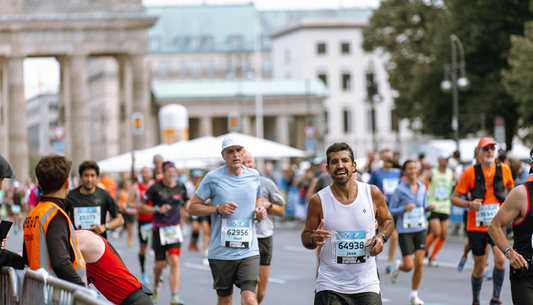

Why Your Racing Singlet Needs Active Odor Defense.
You finish a hard workout and throw your singlet in the hamper. Even after a full wash cycle, it smells the same when you wear it again. This is a common problem for many U.S. runners with Breathable Racing Singlets.

The smell is more than just annoying. It shows that sweat and bacteria are trapped in your running clothes. This can make it hard to focus during races.
This guide will explain what happens in high-performance fabrics. It will also talk about why removing smells can be hard, even with the right detergent. We'll look at how an odor-resistant racing singlet works and why silver ion treatments are important.
Key Takeaways
- A Breathable Racing Singlet can hold odor even after washing.
- Smells often come from sweat and bacteria in the fabric.
- Stronger detergent or longer washes don't always remove smells.
- An odor-resistant singlet tries to stop smells before they start.
- Active odor defense helps keep you fresh during workouts and races.
- Staying fresh is key to distraction-free running, as effort and heat increase.
Why a “clean” racing singlet can smell after washing
You pull a racing top from the dryer and it looks spotless. But, one deep breath later, the smell is back. This persistent odor is a notorious challenge for high-performance running singlets, where the very fibers designed to dry quickly also tend to harbor microscopic residue. Sweat, skin oils, and bacteria can hide in tight fibers, even after washing.

Bacteria-trapping synthetic fabrics and why polyester odor lingers
Modern kits use synthetic fabrics that dry fast and feel light. But, these fabrics can trap odors. Polyester odor can return when the fabric warms up on your body.
In simple terms, the shirt might look clean but not smell fresh. Residue in the fabric can keep the smell going.
How skin oils + sweat bind to technical fibers during high-output efforts
During intense workouts, sweat and skin oils spread on the fabric. These oils cling to synthetic fibers, trapping bad smells. This mix builds up over time, making a quick wash not enough.
The smell is often worse in the chest and lower back. This is where sweat and friction are highest. Even after washing, the shirt might smell faintly sour during the next run.
Moisture-wicking limitations that leave odor-causing residue behind
Wicking moves sweat, but it can't remove all residues. If sweat and oils aren't fully washed out, the fabric dries fast but smells. This is common in lightweight race-day gear.
For marathon runners, this is a hidden problem. Even an airy singlet can hold onto bad smells.
- Fast-drying does not always mean deep-cleaning after laundering.
- Tight knits can protect residues from water flow and detergent contact.
- Heat and body moisture can reactivate lingering polyester odor on the start line.
Going Beyond Ventilation: Why Your Breathable Racing Singlet Must Be Truly Odor-Resistant.
Ventilation makes you feel cooler, but it doesn't solve all race day problems. A breathable racing singlet moves air well, but sweat and oils can soak into fibers. This mix can cause odor, even before you reach the halfway point.

What “breathable anti-stink running gear” needs beyond ventilation
For many runners, airflow is just the start. Good running gear also needs to slow down odor buildup in key areas. This includes the chest, lower back, and under arms. If bacteria multiply on damp fabric, "fresh" can quickly turn into a problem, even if the top dries fast.
- Moisture management that limits sticky residue, not just visible sweat
- Fiber-level odor control that works during wear, not after
- Stable performance across repeat workouts and hot-weather races
How silver ion fabric technology supports anti-odor performance wear
Silver ion fabric technology is a game-changer. It's an ionic defense in technical textiles that reduces odor by limiting bacteria. Unlike fragrances, it targets the root causes of odor.
In simple terms, silver ion fabric keeps your singlet fresh even when sweat is trapped. It aims for steady freshness during long runs, back-to-back workouts, and travel when laundry isn't an option.
Why a performance running singlet should fight odor during the run, not just in the wash
A true odor-resistant racing singlet is tested in the moment, not just after washing. If odor starts at mile six, washing later won't help your focus now. The right materials and construction make a singlet feel lighter and fresher, even as you push harder and the heat rises.
Many athletes seek anti-odor performance wear that works while worn. When odor defense is active, your gear feels consistent from start to finish. This is key when conditions get tough.
Why detergents and wash settings don’t always fix running gear smell removal
When a singlet seems clean but smells, it's because odor is deep-seated. Sweat dries into fibers, creating a film that keeps smells alive. This makes removing running gear smells tricky, even with regular washing.
Surfactants, enzymes, and why some molecules don’t penetrate tight-knit activewear
Detergents use surfactants and enzymes to clean. But, in tight activewear, these can struggle to reach trapped dirt. This leaves behind oils and buildup, making smells harder to remove.
Even if the fabric looks clean, it can smell stale. This is because sweat residue and bacteria are hard to get rid of.
Charged particles: why sweat and bacteria can be harder to remove than dirt and oils
There's a chemistry issue that's often overlooked: charge. Most detergents work well on some soils but not on sweat and bacteria. This is because they share the same negative charge.
In synthetic fabrics, this mix can stick around. This means smells can come back quickly, making it hard to keep your gear fresh.
Cold vs hot water: what temperature can (and can’t) do for hygiene and odor control
Choosing between cold and hot water affects your gear. Cold water is gentler and uses special detergents. It's good for everyday cleaning.
But, for full hygiene, hot water might be needed. A 2021 study found that hot water and bleach can kill tough pathogens. This is why cold water might not always remove all smells.
- Cold water is better for fabrics but might leave smells behind.
- Warm or hot water can remove more, but be careful not to damage your gear.
- Detergent choice is key when smells are deep-seated, as only reachable dirt can be washed away.
Active odor defense explained for technical running apparel
When a singlet smells after washing, it's because sweat salts and microbes stick to tight fabrics. Active odor defense is key in technical running clothes. It aims to stop odor buildup during wear, not just after.
For runners, this is like a backup plan when washing can't fully remove smells. In humid weather, this extra protection can make a big difference.
Shifting the Strategy: How Active Odor Defense Neutralizes Bacteria at the Source.
Odor isn't just from sweat. It's when bacteria feed on sweat and oils, then release bad smells. Active odor defense fights this by slowing down bacteria on the fabric.
This is great when a wash cycle can't fully clean clothes. An odor-resistant singlet helps keep clothes smelling fresh longer.
How antibacterial running singlet treatments help extend long-run freshness
An antibacterial singlet has treatments to stop microbes that cause odor. This means you stay fresh even when you're pushing hard.
It's not a replacement for washing, but it helps stink come back slower. This is a big plus for runners who work out a lot or travel for races.
What to look for in anti-odor performance wear for humid racing and high sweat rates
When buying anti-odor clothes, don't just look for "breathable" labels. Heat and humidity can block airflow, so the fabric's design is key.
- Durable odor control: look for treatments made for long-lasting use, not just gym sessions.
- Fast-drying structure: clothes that dry quickly are less likely to harbor bacteria, keeping you fresh longer.
- Low-bulk comfort: choose a lightweight singlet that doesn't cling and stays smooth under sweat.
- Clear material intent: pick a singlet that balances odor control with breathability, staying comfy even when it's hot and humid.
NEDAO’s approach: the Inner Lane philosophy and engineering for zero distractions
At NEDAO, we approach gear construction the same way an athlete builds fitness: through relentless refinement. Guided by our ‘Inner Lane’ philosophy, we focus on the marginal gains—the small technical details that ensure your focus remains entirely on the road ahead, not on your equipment.
Born from Real Struggles: How Our Journey from Blister-Proof Socks Led to the Ultimate Racing Gear.
NEDAO’s DNA was forged on the track, born from a singular mission to solve the pain of toe blisters. This problem-solving heritage now defines our racing apparel, where we treat odor and cling as mechanical distractions to be engineered away.
This mindset also guides their anti-chafe racing singlet. They focus on performance, not just looks. The goal is to run without distractions, mile after mile.
Why “fresh on the track” matters as much as “light on the scale”
Race day isn't just about being light. Sweat and odor can distract you. This distraction can feel like extra weight over 26.2 miles.
NEDAO designs to keep you fresh on the track. Comfort is key for making good decisions late in a race. The right gear helps you stay focused, even in tough conditions.
Design intent: airflow optimization + odor defense working together
Ventilation is important, but it's not enough. NEDAO combines airflow and odor defense for long runs. They aim for a stable feel against the skin, not a jersey that fades.
- Airflow optimization to move heat and moisture away before it turns heavy.
- Odor control engineered for the run, not just the laundry cycle.
- An anti-chafe racing singlet fit that reduces rubbing points as the body tires.
Men’s QiFlow Racing Singlet V5.0: ultralight racing singlet specs that target sweat and stink
When the pace rises, small distractions get loud. The Men’s QiFlow Racing Singlet V5.0 is built as an ultralight racing singlet. It stays calm under pressure, even in sticky heat and heavy sweat.
Approx. 34g weight and zero-feel construction for a professional marathon singlet fit
With a 34g weight (Men’s M dry), it keeps the feel minimal from the first mile to the final kick. This low mass pairs with a zero-feel construction. It supports a professional marathon singlet fit, so movement stays clean and unforced.
Less bulk also means fewer wet spots to manage when humidity climbs. It’s a direct, spec-led approach to staying focused when form matters.
3D yarn micro-structure for point-contact support to reduce skin adhesion
Our 3D yarn micro-structure creates point-contact support, effectively transforming the QiFlow into a non-stick running singlet that maintains airflow even when fully saturated with sweat.
For runners who sweat hard, this can mean less tugging across the torso and fewer mid-run adjustments. It’s comfort engineering aimed at real race conditions, not just a fitting room.
Approx. 60% airflow improvement vs standard fabrics for an ultralight singlet for humid racing
Heat management depends on how fast sweat can evaporate. With approx. 60% airflow improvement versus standard fabrics, this becomes an ultralight singlet for humid racing. Ventilation supports cooling and steadier effort.
- More air exchange helps move moisture off the skin.
- Less trapped heat can reduce that heavy, damp feel late in the run.
- More consistent comfort supports pacing when conditions turn.
The Science of Freshness: Integrating SILVADUR™ Silver Ion Technology for Persistent Odor Control.
Odor often lingers because bacteria stay active in sweat-soaked fibers. SILVADUR™ treatment brings silver ion technology into the garment. It uses a silver ion fabric approach that targets odor at the source during wear.
That built-in defense supports an odor-resistant racing singlet. It doesn’t depend on perfect wash timing to feel fresh. For long training blocks and travel race weekends, it’s a practical edge that keeps the kit more wearable, more often.
Total Confidence for 26.2 Miles: Why an Anti-Chafe Racing Singlet is Essential for Marathon Pacing.
Marathon day is a long test of focus. A breathable racing singlet should cool you early and stay steady when the pace sharpens late. When sweat builds and fabric starts to cling, small annoyances can turn into big distractions.
An anti-chafe racing singlet helps protect the spots that usually break down first: nipples, underarms, and the edges that rub with each stride. Less friction means fewer mid-race adjustments, even when salt and grit show up. That steady comfort supports distraction-free running when your form matters most.
Odor is part of the same system, not an afterthought. A performance running singlet that keeps long-run freshness tends to feel drier, sit lighter on the skin, and resist that sticky, worn-in funk. For runners who sweat hard, this is often the best singlet for marathon heavy sweaters because comfort doesn’t slide as the miles stack up.
Put it together and the goal is simple: airflow plus active odor defense that holds up through humid starts, crowded corrals, and late-race surges. When your kit stays cool, calm, and stable, it’s easier to lock into splits and execute a negative split without fighting your gear. That’s what a race-ready singlet is meant to deliver—performance, not just a low number on a scale.
Beyond the Finish Line: Optimizing Your Full-Kit Performance
If you’ve ever felt the mental drag of an ill-fitting kit or the self-consciousness of visible sweat marks, you know that performance is as much psychological as it is physical. To help you refine every second of your race day experience, we’ve curated two essential reads to complement your journey:
-
[The Science of Sight: Why Dark-Colored Tights Show Wetness and How to Engineer a Solution] Sweat management doesn't stop at your singlet. Explore why dark technical fabrics often betray your effort with visible moisture, and how the right fiber construction can maintain a clean, distraction-free aesthetic from start to finish.
-
[The Competitive Edge: How a Pro-Grade Racing Singlet Quantifiably Improves Race Performance] Beyond just smelling fresh, how much time can the right singlet actually save you? Dive into the data of thermoregulation, weight-to-wicking ratios, and why elite runners treat their kit as a critical piece of racing machinery.
FAQ
Why does my racing singlet look clean but smell after washing?
Sometimes, even if your singlet looks clean, it can smell. This is because sweat, skin oils, and bacteria can stay in the fabric. When you wear it again, these smells come back.
Why is polyester odor so hard to get out of a performance running singlet?
Polyester fabrics can trap bacteria and oils from your skin. This makes it hard to get rid of smells. Even after washing, the smell can linger.
Does sweating more make odor problems worse in a professional marathon singlet?
Yes, sweating more can make smells worse. When you sweat a lot, your sweat mixes with skin oils. This mix can stick to synthetic fabrics and make smells stronger.
If my singlet is moisture-wicking, shouldn’t it stay fresher?
Moisture-wicking fabrics help move sweat away from your skin. But, they don't remove the mix of sweat, oils, and bacteria that causes smells. So, even breathable singlets can smell if residue stays.
Is breathability enough, or do I need a breathable anti-stink running gear setup?
Breathability is key for cooling. But, it doesn't stop smells from building up. Airflow helps with heat and evaporation, but it won't stop bacteria from causing odors.
What does “true odor resistance” mean for an odor-resistant racing singlet?
True odor resistance means the singlet fights smells while you're wearing it. This is important in humid races, where sweat and oils can quickly cause odors.
How does silver ion fabric technology help with anti-odor performance wear?
Silver ion technology helps fight smells by reducing bacteria. It keeps your gear fresh for longer, without just masking the smell.
Why doesn’t my detergent fully solve running gear smell removal?
Detergents might not reach all the dirt in tight fabrics. This leaves behind residue that can cause smells. So, even after washing, your singlet might smell.
What do charged particles have to do with lingering odor after laundering?
The charge of particles affects what detergents can remove. Some detergents work better on certain types of particles. This can leave smells behind, even if your singlet looks clean.
Should I wash running singlets in hot water to reduce odor and germs?
Washing in hot water can help kill germs. A study found that hot water and bleach are best for some pathogens. But, some modern detergents work well in cold water too.
What is “active odor defense” in a racing kit?
Active odor defense is a way to fight smells during wear. It's a second line of defense when washing doesn't remove all residue from synthetic fabrics.
What should I look for in the best singlet for marathon heavy sweaters?
Look for a singlet that's breathable and has anti-odor features. For heavy sweaters, choose one with antibacterial treatments and a lightweight build. It should also feel comfortable and stay stable when wet.
How does NEDAO’s “Inner Lane” philosophy connect to odor control?
NEDAO focuses on solving real running problems, like blisters. Their philosophy is about making every detail count for distraction-free running. This includes staying fresh during long runs.
Why does “fresh on the track” matter as much as “light on the scale” for racing?
Staying fresh is important because lingering smells can distract you. Over long distances, this distraction can affect your performance. Freshness helps you stay focused and confident.
What makes the Men’s QiFlow Racing Singlet V5.0 an ultralight racing singlet?
The QiFlow Singlet is very light, weighing about 34g. It's designed to fit perfectly and feel like nothing's there. This helps you stay focused during races.
How does the 3D yarn micro-structure help with “non-stick” comfort?
The 3D yarn structure provides support without sticking to your skin. This is great for heavy sweaters, as it keeps the singlet feeling light and comfortable.
How breathable is the QiFlow singlet for humid racing?
The QiFlow Singlet is very breathable, with 60% better airflow than standard fabrics. This makes it perfect for humid races, where it helps keep you cool and dry.
How does SILVADUR™ relate to silver ion technology and persistent odor control?
SILVADUR™ is a treatment that uses silver ions to fight smells. It's built into the singlet to keep you fresh, even during long, sweaty races.
Will an odor-resistant racing singlet also help with anti-chafe comfort?
Yes, an odor-resistant singlet can also be more comfortable. By staying dry and resisting cling, it reduces irritation. This makes for a smoother, more comfortable run.
Tags:
Previous
Why do elite trail runners prefer half tights over traditional split shorts?
Next
Anti-See-Through vs. Sweat-Camouflage: Are you getting both in one pair of tights?